FREE SHIPPING
on Safety Orders Over $99 or $8.99 Flat Rate Shipping on Orders Below $99 *Exclusions Apply*
IMPORTANT SHIPPING INFORMATION
Time-Sensitive Order?
Call 877-902-9417 or email cs@rajsupply.com to verify availability and shipping lead time.
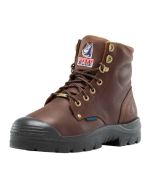
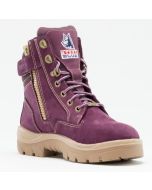
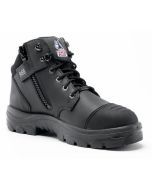
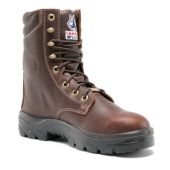
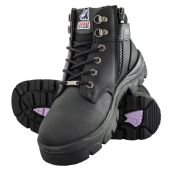
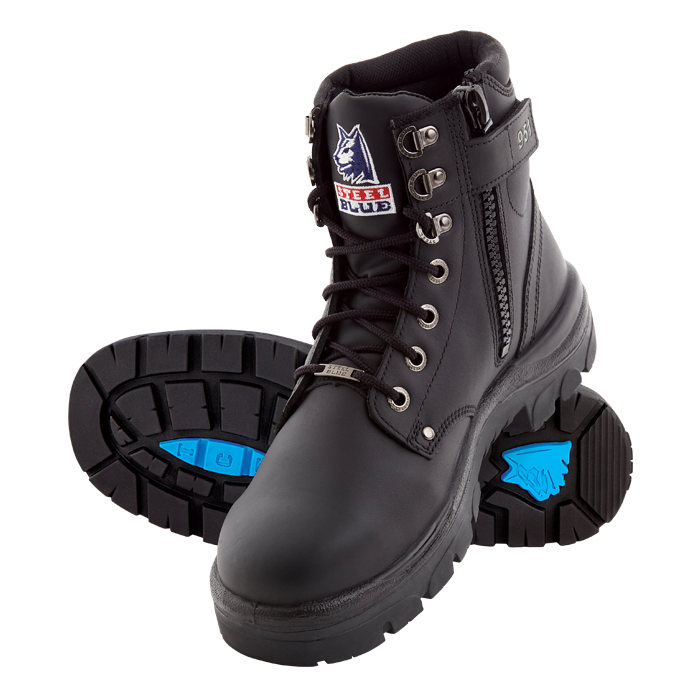
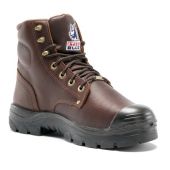
Steel Blue 312951 Argyle Zip 6″ Steel Toe Work Boots – Black
$230.00
The Argyle Zip is a 6-inch men’s derby style, lace-up ankle boot with an industrial grade zipper so you don’t have to worry about tying up laces every day. A popular 100% comfortable choice for Tilers, Dock Workers and Plumbers with a 200 joule safetysteel toecap. The Argyle Zip boot has a TPU outsole heat resistant to 130 degrees, has static dissipative properties and premium water resistant leather available in black.
This style is available in Medium (M) and Wide (W) fit options.
Steel Blue Argyle Zip Boots are independently certified to major international safety standards and the American Standard ASTM F2413-11.
STATIC DISSIPATIVE
Our boots with Static Dissipative properties offer a level of protection against ignition hazards.
Static dissipative footwear shall be constructed and manufactured to provide protection through conduction and resistance to the wearer against hazards which may exist due to excessively low footwear resistance in a work environment, as well as maintain a sufficiently high level of resistance to reduce the possibility of electrical shock in work areas where SD footwear is worn such as electrical assembly.
Footwear shall reduce the excess static electricity by conducting the charge (from body) to ground while simultaneously maintaining a sufficiently high level of resistance (1 megohm) to protect the wearer when exposed to hazards by stepping on live electric circuits.
STEEL TOE CAP
Steel Toe Caps are often mandatory on many worksites, so they’re our most popular choice.
All of the boots with the steel safety toecap feature offer premium protection for your toes. Each steel toecap boot in the Steel Blue range features our Hardened Steel Type 1 Toecap designed to meet ASTM 2413-11. This type of steel toecap is capable of resisting a drop force of 101.7 Joules. Our boots with the steel safety toecap feature are suitable for a wide range of industrial, construction and other general purpose workplace applications.
ZIP SIDED
Think of these as an emergency escape route for your foot allowing for quick, easy access.
Lace up your boots for a secure, comfortable fit then leave the laces tied and use the side zippers to save time; use the side zips to widen the foot opening without unlacing your boots every time you take them off. Steel Blue zips far exceed all tested minimum requirements. They are industrial grade and built to last and a special velcro tab to stop the zip from rattling while working. When you’re on-the-go and constantly in and out of your work boots, the side zip is the only way to go.
WATER RESISTANT
Our water resistant boots are very resilient when exposed to water increasing longevity of wear.
The soling material of all Steel Blue Boots is actually waterproof. It is the upper materials and the stitching process that determines the level of water resistance. Most styles feature the highest quality premium water resistant leather. This is complemented by the highest possible manufacturing standards, which are applied during the stitching process. With our boots also featuring extra resilient stitching, Steel Blue boots offer unsurpassed performance in wet and muddy work environments.
TPU OUTSOLE
Our boots with an extra tough and durable TPU outsole are suitable for most occupations.
As a general guide, TPU is the all-rounder, suiting most work environments. It is highly resistant to most oils and chemicals while also being heat resistant up to 266ºF. The TPU sole has a high tolerance to cuts and excellent tear strength, while maintaining slip resistant capabilities. It is also very durable, providing a high tolerance against abrasion, splitting and cracking. Most of our boots come standard with a TPU outsole and it is by far our most popular sole type.
100% COMFORT GUARANTEED
We literally guarantee 100% comfort, so if you’re not happy in the first 60 days, you’ll get your money back! You have absolutely nothing to lose by trying Steel Blue.
| SELECT SIZE |
7 Medium ,8 Medium ,8 Wide ,8.5 Medium ,8.5 Wide ,9 Medium ,9 Wide ,9.5 Medium ,9.5 Wide ,10 Medium ,10 Wide ,10.5 Medium ,10.5 Wide ,11 Medium ,11 Wide ,11.5 Medium ,11.5 Wide ,12 Medium ,12 Wide ,13 Medium ,13 Wide ,14 Wide ,14 Medium ,15 Medium |
|---|---|
| Gender |
Men's |
| Brand | |
| SKUs |
312951M, 312951W |
| Style |
Steel Toe |
| Availability |
– Factory Direct – Allow 1-3 business days |
Of all PPE sizing challenges, accurate sizing for respirators is the most critical. Confusion sometimes occurs because respirator sizes are given descriptors (small, medium and large), but these generally do not relate to any measurable value. Respirators are made with the assumption that most people’s faces and heads have about the same width and length. This means that a medium size will fit approximately 70 percent of the adult population. Small and large sizes are made for a minority of the population. People who need these sizes generally know from their experience buying hats or prescription eyewear that their face and head size falls outside the norm. The only way to ensure the correct size for tight fitting respirators is to conduct the required fit testing.
By the time we reach adulthood, most of us have figured out how to find a pair of comfortable shoes, but in PPE, overshoes/overboots sizing can be confusing. Most overshoes/overboots are sized to fit men, to fit over the shoes being worn underneath and to correspond in size. For example, a size 10 overshoe should fit over a size 10 shoe.
Women’s to Men’s Shoe Sizing Conversion
When converting women’s shoe sizes to men’s shoe sizes, you need to size down two whole sizes. For example, a women’s shoe size 10 is a men’s shoe size 8. Also bear in mind that men’s footwear tends to run wider than women’s footwear.
Men’s International Shoe Sizing Conversion Chart
When converting a men’s shoe size to the correct U.S. shoe size, use the following chart. For example, a men’s European shoe size 44 is a U.S. shoe size 10.5.
|
US & Canada |
M |
3.5 |
4 |
4.5 |
5 |
5.5 |
6 |
6.5 |
7 |
7.5 |
8 |
8.5 |
9 |
10.5 |
11.5 |
12.5 |
14.5 |
|
W |
5 |
5.5 |
6 |
6.5 |
7 |
7.5 |
8 |
8.5 |
9 |
9.5 |
10 |
10.5 |
12 |
13 |
14 |
15.5 |
|
|
Europe |
35 |
35.5 |
36 |
37 |
37.5 |
38 |
38.5 |
39 |
40 |
41 |
42 |
43 |
44 |
45 |
46.5 |
48.5 |
Please note that these charts are a guide for garment selection, but proper fit varies with individual body shape, underclothing, type of clothing and manufacturer. Test for proper fit before use. Garment performance depends on selecting the appropriate size.
Note: This chart is based on individuals wearing SCBA, safety helmet and standard work clothing. Fit varies with individual body types.
Workwear Clothing
Men’s Sizing
|
Size |
Neck |
Chest |
Waist |
Sleeve |
|---|---|---|---|---|
|
S |
14–14.5 |
34–36 |
28–30 |
32.5–33 |
|
M |
15–15.5 |
38–40 |
32–34 |
33.5–34 |
|
L |
16–16.5 |
42–44 |
36–38 |
34.5–35 |
|
XL |
17–17.5 |
46–48 |
40–42 |
35.5–36 |
|
2XL |
18–18.5 |
50–52 |
44–46 |
36.5–37 |
|
3XL |
19–19.5 |
54–56 |
48–50 |
37–37.5 |
|
4XL |
20–20.5 |
58–60 |
52–54 |
38–38.5 |
|
5XL |
21–21.5 |
62–64 |
56–58 |
39 |
|
6XL |
22–22.5 |
66–68 |
60–62 |
40 |
Source: Gempler’s
Women’s Sizing
|
Size |
Bust |
Waist |
Hips |
|---|---|---|---|
|
XS (0–2) |
31–32 |
24–25 |
34.5–35.5 |
|
S (4–6) |
33–34 |
26–27 |
36.5–37.5 |
|
M (8–10) |
35–36 |
28–29 |
38.5–39.5 |
|
L (12–14) |
37.5–39 |
30.5–32 |
41–42.5 |
|
XL (16–18) |
40.5–42.5 |
33.5–35.5 |
44–46 |
|
2Xl (20) |
45 |
36 |
48.5 |
Source: Gempler’s
Rainwear Clothing
Unisex Sizing
|
Size |
Chest |
Waist |
|---|---|---|
|
XS |
32–34 |
26–28 |
|
S |
36–38 |
30–32 |
|
M |
40–42 |
34–36 |
|
L |
44–46 |
38–40 |
|
XL |
48–50 |
42–44 |
|
2XL |
52–54 |
46–48 |
|
3XL |
56–58 |
50–52 |
|
4XL |
60–62 |
54–56 |
|
5XL |
64–66 |
58–60 |
|
6XL |
68–70 |
62–64 |
It is important to know how to measure the hand to get a proper fitting glove. Measuring the hand for correct fit will give the employee the best possible protection without compromising the task, duty or safety of the wearer. There are two suggested ways to find the correct glove size. One way is to measure the width of the hand — measure around the hand (a dominant hand measurement is preferred) with a tape measure as shown below. The dominant hand will be the right if you are right-handed and left if you are left-handed.
If the gloves you are purchasing come in numbered sizes, you can relate the measurement directly to the numerical size listed for the glove. For example, if the measurement taken is exactly eight inches (203 millimeters) then you would select a size eight glove. To avoid hand fatigue, order the next larger size for all measurements that are not exact inch/millimeter measurements. If the gloves you are purchasing come in extra-small (XS), small (S), medium (M), large (L), extra-large (XL) or double extra-large (XXL), use the table below to translate the inch/millimeter measurement.

If the gloves you are purchasing come in numbered sizes, you can relate the measurement directly to the numerical size listed for the glove. For example, if the measurement taken is exactly eight inches (203 millimeters) then you would select a size eight glove. To avoid hand fatigue, order the next larger size for all measurements that are not exact inch/millimeter measurements. If the gloves you are purchasing come in extra-small (XS), small (S), medium (M), large (L), extra-large (XL) or double extra-large (XXL), use the table below to translate the inch/millimeter measurement.
| US Sizes | EU Sizes | ||
| 6–7 Inches | XS | 152–178 Milimeters | EU – 6 |
| 7–8 Inches | S | 178–203 Milimeters | EU – 7 |
| 8–9 Inches | M | 203–229 Milimeters | EU – 8 |
| 9–10 Inches | L | 229–254 Milimeters | EU – 9 |
| 10–11 Inches | XL | 254–279 Milimeters | EU – 10 |
| 11 + Inches | XXL | 279 + Milimeters | EU – 11 |
Source: Turtleskin Glove/Warwick Mills, Inc.
Another method is to measure the length of your hand by measuring from the bottom edge of the palm to the tip of the longest finger as illustrated below.

| US Sizes | EU Sizes | ||
| 6 5/16 Inches | XS | 160 Milimeters | EU – 6 |
| 6 3/4 Inches | S | 171 Milimeters | EU – 7 |
| 7 3/16 Inches | M | 182 Milimeters | EU – 8 |
| 7 9/16 Inches | L | 192 Milimeters | EU – 9 |
| 8 1/16 Inches | XL | 204 Milimeters | EU – 10 |
| 8 7/16 + Inches | XXL | 215 + Milimeters | EU – 11 |
Source: Turtleskin Glove/Warwick Mills, Inc.
There are six (6) classes of electrical gloves, and you know which class you need based on the voltages you will be working with. You can find the full OSHA guidelines in standard 29 CFR 1910.137
- Class 00 – Protects workers up to 500 VAC and 750 VDC
- Class 0 – Protects workers up to 1,000 VAC and 1,500 VDC
- Class 1 – Protects workers up to 7,500 VAC and 11,250 VDC
- Class 2 – Protects workers up to 17,000 VAC and 25,000 VDC
- Class 3 – Protects workers up to 26,500 VAC and 39,750 VDC
- Class 4 – Protects workers up to 36,000 VAC and 54,000 VDC
Sizing Chart
| Hat Size | Circumference CM | Circumference Inches |
| 6 1/2 | 52 | 20 1/2 |
| 6 5/8 | 53 | 20 7/8 |
| 6 3/4 | 54 | 21 1/4 |
| 6 7/8 | 55 | 21 5/8 |
| 7 | 56 | 22 |
| 7 1/8 | 57 | 23 5/8 |
| 7 1/4 | 58 | 22 3/4 |
| 7 3/8 | 59 | 23 1/8 |
| 7 1/2 | 60 | 23 1/2 |
| 7 5/8 | 61 | 23 7/8 |
| 7 3/4 | 62 | 24 1/4 |
| 7 7/8 | 63 | 24 5/8 |
| 8 | 64 | 25 |
| 8 1/2 | 68 | 26 1/2 |
| Note: This table is intended for sizing guidance of round head bands only and should not be construed as prohibiting larger or smaller headbands | ||


If the wearer is not using electrically insulated gloves or any other electrical protective clothing or tools, it is likely that the Class E is not a necessary requirement to meet. In such cases, the benefits of a Class C Vented hard hat, such as comfort and reduced fatigue from heat exposure, will help improve output from the worker.
As a general guideline, it is recommended to replace the suspension annually and the hard hat every five years regardless of outside appearance.
While OSHA has no specific provision for an expiration date, manufacturers are allowed to determine if their equipment expires on a specific calendar date.
Hard hat lifespans may vary depending on the conditions of each work site. Hard hats subjected to more wear and tear or used outdoors in direct sunlight may need to be replaced more frequently. Daily inspections are the best way to determine when to replace a hard hat shell, suspension, or the entire unit. The suggested replacement is based on service life (Based on when the hard hat was placed into service, not the manufacture date).
As a general guideline, it is recommended to replace the suspension annually and the hard hat every five years regardless of outside appearance, but this can vary due to use and job site conditions
Regardless of the length of use, if a hard hat has been struck by a forcible blow of any magnitude, the shell and suspension should be replaced immediately, even if no damage is visible. Dropping a hard hat more than 8 to 10 feet warrants a replacement. Don't take a chance that it "might" be okay because it's not worth the risk. Hard hats are designed to provide optimum protection under normal conditions. ANY impact can substantially reduce the protection offered.
OSHA’s general requirements for PPE are set forth in 29 CFR 1910.132. The specific requirements for head protection (protective helmets) are outlined in 29 CFR 1910.135, which incorporates by reference American National Standards Institute (ANSI) Z89.1-1986, Z89.1-1997, and Z89.1-2003. Both 29 CFR 1910.132 and 1910.135 do not contain provisions that explicitly prohibit painting or the placement of adhesive stickers on helmet shells. However, the employer’s ability to comply with the existing requirements of these standards may be adversely affected by the painting or placement of adhesive stickers on the helmet’s shell.
For instance, OSHA standard 29 CFR 1910.132(a) requires that PPE be “…maintained in a sanitary and reliable condition…” [Emphasis added.] To ensure a helmet is and remains in a “reliable” condition, the helmet must be inspected prior to use for signs of dents, cracks, penetration, and any damage due to impact, rough treatment, or wear that might reduce the degree of protection originally provided and used and maintained in accordance with the manufacturer’s instructions. Paints and stickers may eliminate electrical resistance and – depending on the location and quantity – conceal defects, cracks, penetration, and any damage that would be otherwise readily identifiable during the employee’s inspection to ensure reliability. Another concern is that paints, thinners, and solvents, as discussed in Appendix A of ANSI Z89.1-2003 and the appendices of the 1986 and 1997 versions, can also attack or damage the shell of a helmet and reduce protection.
For these reasons, painting or applying stickers must be performed in accordance with the manufacturer’s instructions, unless the employer can demonstrate that the altered protective helmet is equally as effective and protective as those meeting the requirements of Z89.1. Protective helmet manufacturers usually provide very specific instructions regarding paints, stickers, or decals that will not negatively affect the performance of a protective helmet.
OSHA would consider painting or placing adhesive stickers acceptable if the manufacturer authorizes the alteration or the employer can demonstrate that the reliability of the helmet is not affected by the paint or the adhesive on the stickers; and the paint or placement of stickers would not reduce the ability to identify defects (i.e., use of see-through stickers) or other conditions that would indicate a reduced reliability.
6843 N. Citrus Ave Ste. W Crystal River, Florida 34428 USA
We offer logo service on many of the PPE products we sell. To receive a custom quote please use this request form.