FREE SHIPPING

on Safety Orders Over $99 or $8.99 Flat Rate Shipping on Orders Below $99 *Exclusions Apply*

IMPORTANT SHIPPING INFORMATION

Click here for important info

Time-Sensitive Order?

Call 877-902-9417 or email cs@rajsupply.com to verify availability and shipping lead time.

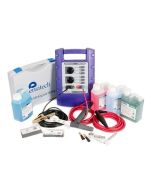
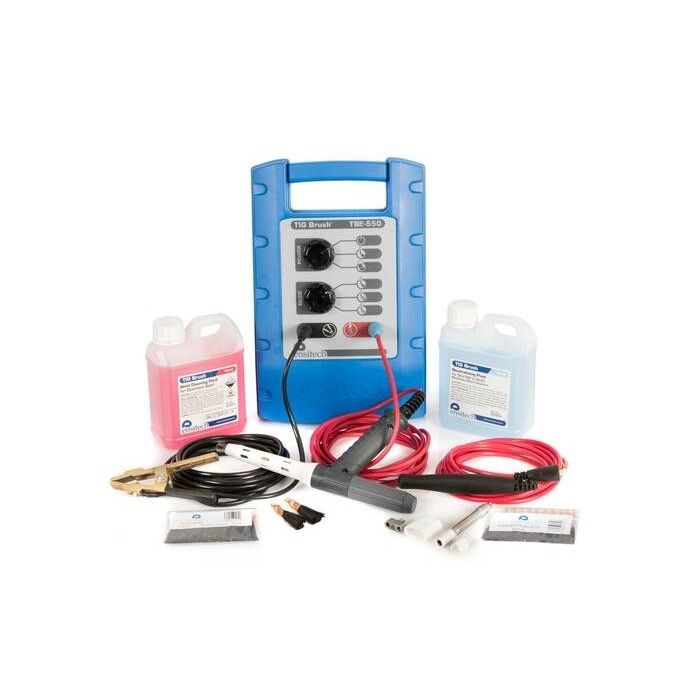
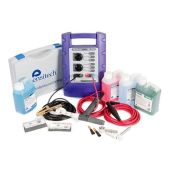
Ensitech TIG Brush TBE-550 PROPEL Kit Weld Cleaning System

Allow 1-3 Business Days to Ship If you select or require an expedited delivery service please take shipping & processing note above into account.
Factory Direct Factory Direct – This item ships directly to you from the manufacturer or the manufacturer's warehouse

$4,611.99

Purchase this product now and earn 4,612 Points!
SKU: K-E550P-F2542-RB1 Categories: ,
Description

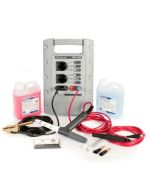
Product picture shown is for illustration purposes only. Actual product contents may vary due to factory product updates and changes. See below kit contents for the full included contents. 


Kit Contents:

  • 1 – TBE-550 Control Unit 
  • 1 – PROPEL Torch w/ 10 Brushes
  • 1 –  13′ Black Grounding Cable 
  • 1 – Quart TB-25 Weld Cleaning Fluid
  • 1 – Quart TB-42 Neutralizing Fluid 
  • 1 – Power Cord, PPE Pack & Operation Manual 


The TBE-550 utilizes a specifically focused adaptation of the 700 series design, to align its performance with Ensitech’s latest technological advance, the Propel Torch.

As you would expect, this gives you superior results consistently and reliably delivered by our proven combination of heat, electricity, and the use of genuine TIG Brush cleaning, marking, and etching fluids.

TIG Brush’s ongoing innovation and patented power delivery system gives you peace of mind in the knowledge that you have achieved the industry’s highest level of passivation in a fast but safe way.


  • DYNAMIC POWER TRANSFER
  • OPTIMIZED FOR USE WITH PROPEL TORCH NEW GENERATION HIGH CURRENT OUTPUT INCREASED POWER (KE550P)
  • ENHANCED POWER
  • 110V SINGLE-PHASE POWER
  • WELD CLEANING AND PASSIVATION
  • POLISHING MODE
  • ETCHING & MARKING CAPABLE
  • 100% DUTY CYCLE
  • 24 MONTH WARRANTY
  • SINGLE, DUAL, AND QUAD BRUSH MODE
  • IP65 DEGREE OF PROTECTION
  • NSF APPROVED


To retain its leading position, Ensitech understood the necessity to think outside the box. User focus has now shifted from the power supply to the application process; the user requires a solution that is fast, safe, ergonomic, and economical. 

The design (patent pending) of the Propel Torch differs radically. The “T” shaped handle allows the user’s wrist to assume a more natural position during weld cleaning, reduces user fatigue, and provides a safer, more powerful method of cleaning.

The Propel Torch also gives the TIG Brush user the ability to limit the brush length exposed from the shroud to ensure the brush is used to maximum efficiency.


Propel Torch Features

Extended Brush Life – The Propel Torch gives the TIG Brush user the ability to limit the brush length exposed from the shroud to ensure the brush is used to maximum efficiency.

The concentration of Power – The Propel Torch automatically confines the tip of the brush to a much smaller diameter compared to conventional brush handles giving a greater concentration of power to the area being cleaned.

Fingertip Brush Length Adjustment – The Propel Torch allows a single rotation of the adjustment control to either extend or retract the required amount of exposed brush to adapt to all weld cleaning requirements.

Patented Quick-Release Brush – The Propel Torch has a patented threadless quick-release brush system that allows easy removal and replacing of the brush tips, and no more issues of corroded threaded brushes.

Economical & Cost Saving – The Propel Torch gives the user up to 3 times more brush life (if used per manufacturer recommendation), thus massively reducing the cost of brush consumables and lowering the overall cost of production.


product selector

Additional information
Brand

Documents

Documents

Reviews
FAQs
What size respirator should I order?

Of all PPE sizing challenges, accurate sizing for respirators is the most critical. Confusion sometimes occurs because respirator sizes are given descriptors (small, medium and large), but these generally do not relate to any measurable value. Respirators are made with the assumption that most people’s faces and heads have about the same width and length. This means that a medium size will fit approximately 70 percent of the adult population. Small and large sizes are made for a minority of the population. People who need these sizes generally know from their experience buying hats or prescription eyewear that their face and head size falls outside the norm. The only way to ensure the correct size for tight fitting respirators is to conduct the required fit testing.

What size Safety Shoe should I order?

By the time we reach adulthood, most of us have figured out how to find a pair of comfortable shoes, but in PPE, overshoes/overboots sizing can be confusing. Most overshoes/overboots are sized to fit men, to fit over the shoes being worn underneath and to correspond in size. For example, a size 10 overshoe should fit over a size 10 shoe.

Women’s to Men’s Shoe Sizing Conversion
When converting women’s shoe sizes to men’s shoe sizes, you need to size down two whole sizes. For example, a women’s shoe size 10 is a men’s shoe size 8. Also bear in mind that men’s footwear tends to run wider than women’s footwear.

Men’s International Shoe Sizing Conversion Chart
When converting a men’s shoe size to the correct U.S. shoe size, use the following chart. For example, a men’s European shoe size 44 is a U.S. shoe size 10.5. 

US & Canada

M

3.5

4

4.5

5

5.5

6

6.5

7

7.5

8

8.5

9

10.5

11.5

12.5

14.5

W

5

5.5

6

6.5

7

7.5

8

8.5

9

9.5

10

10.5

12

13

14

15.5

Europe

35

35.5

36

37

37.5

38

38.5

39

40

41

42

43

44

45

46.5

48.5

What size clothing do I order?

Please note that these charts are a guide for garment selection, but proper fit varies with individual body shape, underclothing, type of clothing and manufacturer. Test for proper fit before use. Garment performance depends on selecting the appropriate size.

Source: DuPont
Source: DuPont

Note: This chart is based on individuals wearing SCBA, safety helmet and standard work clothing. Fit varies with individual body types.

Workwear Clothing

Men’s Sizing

Size

Neck

Chest

Waist

Sleeve

S

14–14.5

34–36

28–30

32.5–33

M

15–15.5

38–40

32–34

33.5–34

L

16–16.5

42–44

36–38

34.5–35

XL

17–17.5

46–48

40–42

35.5–36

2XL

18–18.5

50–52

44–46

36.5–37

3XL

19–19.5

54–56

48–50

37–37.5

4XL

20–20.5

58–60

52–54

38–38.5

5XL

21–21.5

62–64

56–58

39

6XL

22–22.5

66–68

60–62

40

Source: Gempler’s

Women’s Sizing

Size

Bust

Waist

Hips

XS (0–2)

31–32

24–25

34.5–35.5

S (4–6)

33–34

26–27

36.5–37.5

M (8–10)

35–36

28–29

38.5–39.5

L (12–14)

37.5–39

30.5–32

41–42.5

XL (16–18)

40.5–42.5

33.5–35.5

44–46

2Xl (20)

45

36

48.5

Source: Gempler’s

Rainwear Clothing

Unisex Sizing

Size

Chest

Waist

XS

32–34

26–28

S

36–38

30–32

M

40–42

34–36

L

44–46

38–40

XL

48–50

42–44

2XL

52–54

46–48

3XL

56–58

50–52

4XL

60–62

54–56

5XL

64–66

58–60

6XL

68–70

62–64

Source: Gempler’s

What size gloves should I order?

It is important to know how to measure the hand to get a proper fitting glove. Measuring the hand for correct fit will give the employee the best possible protection without compromising the task, duty or safety of the wearer. There are two suggested ways to find the correct glove size. One way is to measure the width of the hand — measure around the hand (a dominant hand measurement is preferred) with a tape measure as shown below. The dominant hand will be the right if you are right-handed and left if you are left-handed.

If the gloves you are purchasing come in numbered sizes, you can relate the measurement directly to the numerical size listed for the glove. For example, if the measurement taken is exactly eight inches (203 millimeters) then you would select a size eight glove. To avoid hand fatigue, order the next larger size for all measurements that are not exact inch/millimeter measurements. If the gloves you are purchasing come in extra-small (XS), small (S), medium (M), large (L), extra-large (XL) or double extra-large (XXL), use the table below to translate the inch/millimeter measurement.

If the gloves you are purchasing come in numbered sizes, you can relate the measurement directly to the numerical size listed for the glove. For example, if the measurement taken is exactly eight inches (203 millimeters) then you would select a size eight glove. To avoid hand fatigue, order the next larger size for all measurements that are not exact inch/millimeter measurements. If the gloves you are purchasing come in extra-small (XS), small (S), medium (M), large (L), extra-large (XL) or double extra-large (XXL), use the table below to translate the inch/millimeter measurement.

US SizesEU Sizes
6–7 InchesXS152–178 MilimetersEU – 6
7–8 InchesS178–203 MilimetersEU – 7
8–9 InchesM203–229 MilimetersEU – 8
9–10 InchesL229–254 MilimetersEU – 9
10–11 InchesXL254–279 MilimetersEU – 10
11 + InchesXXL279 + MilimetersEU – 11

Source: Turtleskin Glove/Warwick Mills, Inc.

Another method is to measure the length of your hand by measuring from the bottom edge of the palm to the tip of the longest finger as illustrated below.

US SizesEU Sizes
6 5/16 InchesXS160 MilimetersEU – 6
6 3/4 InchesS171 MilimetersEU – 7
7 3/16 InchesM182 MilimetersEU – 8
7 9/16 InchesL192 MilimetersEU – 9
8 1/16 InchesXL204 MilimetersEU – 10
8 7/16 + InchesXXL215 + MilimetersEU – 11

Source: Turtleskin Glove/Warwick Mills, Inc.

What do the different class ratings mean on electrical gloves?

There are six (6) classes of electrical gloves, and you know which class you need based on the voltages you will be working with. You can find the full OSHA guidelines in standard 29 CFR 1910.137

  • Class 00 – Protects workers up to 500 VAC and 750 VDC
  • Class 0 – Protects workers up to 1,000 VAC and 1,500 VDC
  • Class 1 – Protects workers up to 7,500 VAC and 11,250 VDC
  • Class 2 – Protects workers up to 17,000 VAC and 25,000 VDC
  • Class 3 – Protects workers up to 26,500 VAC and 39,750 VDC
  • Class 4 – Protects workers up to 36,000 VAC and 54,000 VDC
What size hard hat do I need?
To measure for your hat size, place a soft cloth tape measure around the widest part of your head (this is usually just above the eyebrows). Pull the tape measure snug, but not tight. Convert inches to hat size using the sizing chart below.

Sizing Chart

Hat Size Circumference CM Circumference Inches
6 1/2 52 20 1/2
6 5/8 53 20 7/8
6 3/4 54 21 1/4
6 7/8 55 21 5/8
7 56 22
7 1/8 57 23 5/8
7 1/4 58 22 3/4
7 3/8 59 23 1/8
7 1/2 60 23 1/2
7 5/8 61 23 7/8
7 3/4 62 24 1/4
7 7/8 63 24 5/8
8 64 25
8 1/2 68 26 1/2
Note: This table is intended for sizing guidance of round head bands only and should not be construed as prohibiting larger or smaller headbands
What is the difference between the hard hat types and classes?

If the wearer is not using electrically insulated gloves or any other electrical protective clothing or tools, it is likely that the Class E is not a necessary requirement to meet. In such cases, the benefits of a Class C Vented hard hat, such as comfort and reduced fatigue from heat exposure, will help improve output from the worker.

When should I replace my hard hat?

As a general guideline, it is recommended to replace the suspension annually and the hard hat every five years regardless of outside appearance.

While OSHA has no specific provision for an expiration date, manufacturers are allowed to determine if their equipment expires on a specific calendar date. 

Hard hat lifespans may vary depending on the conditions of each work site. Hard hats subjected to more wear and tear or used outdoors in direct sunlight may need to be replaced more frequently. Daily inspections are the best way to determine when to replace a hard hat shell, suspension, or the entire unit. The suggested replacement is based on service life (Based on when the hard hat was placed into service, not the manufacture date).

As a general guideline, it is recommended to replace the suspension annually and the hard hat every five years regardless of outside appearance, but this can vary due to use and job site conditions

Regardless of the length of use, if a hard hat has been struck by a forcible blow of any magnitude, the shell and suspension should be replaced immediately, even if no damage is visible. Dropping a hard hat more than 8 to 10 feet warrants a replacement. Don't take a chance that it "might" be okay because it's not worth the risk. Hard hats are designed to provide optimum protection under normal conditions. ANY impact can substantially reduce the protection offered.

Are stickers or paint allowed on hard hats?

OSHA’s general requirements for PPE are set forth in 29 CFR 1910.132. The specific requirements for head protection (protective helmets) are outlined in 29 CFR 1910.135, which incorporates by reference American National Standards Institute (ANSI) Z89.1-1986, Z89.1-1997, and Z89.1-2003. Both 29 CFR 1910.132 and 1910.135 do not contain provisions that explicitly prohibit painting or the placement of adhesive stickers on helmet shells. However, the employer’s ability to comply with the existing requirements of these standards may be adversely affected by the painting or placement of adhesive stickers on the helmet’s shell.

For instance, OSHA standard 29 CFR 1910.132(a) requires that PPE be “…maintained in a sanitary and reliable condition…” [Emphasis added.] To ensure a helmet is and remains in a “reliable” condition, the helmet must be inspected prior to use for signs of dents, cracks, penetration, and any damage due to impact, rough treatment, or wear that might reduce the degree of protection originally provided and used and maintained in accordance with the manufacturer’s instructions. Paints and stickers may eliminate electrical resistance and – depending on the location and quantity – conceal defects, cracks, penetration, and any damage that would be otherwise readily identifiable during the employee’s inspection to ensure reliability. Another concern is that paints, thinners, and solvents, as discussed in Appendix A of ANSI Z89.1-2003 and the appendices of the 1986 and 1997 versions, can also attack or damage the shell of a helmet and reduce protection.

For these reasons, painting or applying stickers must be performed in accordance with the manufacturer’s instructions, unless the employer can demonstrate that the altered protective helmet is equally as effective and protective as those meeting the requirements of Z89.1. Protective helmet manufacturers usually provide very specific instructions regarding paints, stickers, or decals that will not negatively affect the performance of a protective helmet.

OSHA would consider painting or placing adhesive stickers acceptable if the manufacturer authorizes the alteration or the employer can demonstrate that the reliability of the helmet is not affected by the paint or the adhesive on the stickers; and the paint or placement of stickers would not reduce the ability to identify defects (i.e., use of see-through stickers) or other conditions that would indicate a reduced reliability.

Where are you located?

6843 N. Citrus Ave Ste. W  Crystal River, Florida 34428 USA

How do I add my logo to products?

We offer logo service on many of the PPE products we sell. To receive a custom quote please use this request form.